• Skip to primary navigation
  • Skip to main content
  • Skip to primary sidebar
  • Skip to footer

How Did You Cook That

  • Recipes
    • Main Dishes
      • Street Corn Soup
      • Maple Ginger Chicken and Asparagus
      • Homemade Gnocchi with Garlic and Parmesan
      • Loaded Baked Potato Soup
      • Beef Bourguignon
      • Grilled Salmon Tacos
      • Thai Inspired Shrimp Curry Soup
      • Chicken and Sausage Gumbo
      • Cast Iron Skillet Pizza
        • Vegetarian
          • Creamy Sweet Potato Curry
          • Pan Tossed Vegetarian Noodles
          • Zucchini & Mushroom Bucatini
          • Stir Fried Baby Bok Choy
          • Roasted Red Pepper and Tomato Soup
          • Potato Leek Soup
          • Portobello “Steak” and Potatoes
          • Cheesy Cauliflower & Carrot Soup
    • Companions
      • Roasted Garlic Tomatoes with Thyme
      • Crisp Green Salad with Sweet Honey Vinaigrette
      • Zucchini Fritters
      • Easy Flat Bread
      • Animal Style French Fries (Copy Cat Version)
      • Cheesy Jalapeno Cornbread
      • Buffalo Cauliflower Bites
    • Breakfast
      • Chilaquiles Rojos with Eggs
      • Sour Cream and Onion Biscuits
      • Dutch Baby with Blueberries
      • Blueberry Lemon Muffins with Streusel Topping
      • Egg In A Jar
      • Creamy Acai Bowls
      • Baked Irish Oats with Cream
      • Fluffy Buttermilk Pancakes
      • Original French Crepes
      • Vanilla Spiced Overnight Oats
      • Seriously Delicious Waffles
      • Southern Buttermilk Biscuits
    • Sauces
      • Creamy Thousand Island Dressing
      • Spicy Mango Salsa
      • Favorite Avocado Recipes
      • Loquat Marmalade
      • Adobo Chile Aioli
    • Desserts
      • Number One Ice Cream
      • Loaded Trail Mix Cookies
      • Toasted Candied Pecans
      • Angel Food Loaf Cake
      • Easy Banana Zucchini Bread
      • Triple Chocolate Cake with Whipped Ganache Frosting
      • Key Lime Cheesecake
      • Cinnamon Sour Cream Coffee Cake
      • Zach’s Chocolate Chip Cookies
      • Strawberry Rhubarb Galette
      • Spiced Cheesecake
      • Berry Fruit Crumble
      • Banana Cinnamon Crunch Bread
    • Thirst Quenchers
      • The Forager Cocktail
      • Cucumber Cilantro Gin Tonic
      • Sunrise Glow Smoothie
      • Three Day Ginger Beer
  • Experiences
    • Los Angeles Pop Ups – Zoe Food Party
    • Los Angeles Bread Crawl
    • The Great Outdoors (A Basic Pantry List)
  • Food Muse
    • A Note About Sugar
    • No More Plastic!
    • Best Buttermilk Substitutions
    • Prepping and Storing Cilantro
    • Home Roasted Coffee
  • Sugar Loaf
    • How to Feed a Sourdough Starter
    • Sourdough Pancakes
    • Sourdough Country Bread Loaf
  • About
  • Navigation Menu: Social Icons

    • Facebook
    • Instagram

How Did You Cook That

Sourdough Country Bread Loaf

May 11, 2020 by How Did You Cook That

Sourdough Country Bread Loaf

Bread is baked in every type of environment all over the world. As you can imagine, that makes for as many different ways to bake bread as there are bakers of bread. Sourdough bread is no exception. In each unique kitchen bread dough is subject to countless, hard-to-control variables. Temperature, humidity, types of water, flour or oven all vary depending on the kitchen, baker or region.

Because of this, there are endless numbers of bread recipes to be found in books and on the internet. My advice: Grab a basic recipe that works for you and make that your starting point. Learn from it, then experiment with it. Change the variables that are more appropriate for your kitchen, your available time or your budget. Try different flours and tools. Keep in mind that this, or any recipe for fermented sourdough bread, is not a guarantee for perfection. It’s just an outline of the specific tools and techniques you will need to get started.

This recipe for a basic country sourdough loaf is the one I use at home, in my own kitchen. I have given specific measurements and times for this bread, however, measurements, length of fermentation, folding, proofing and baking are often different every time I bake it. This is because I may use different combinations or types of flour. It may be summer and blazing hot or winter and quite chilly in my kitchen.

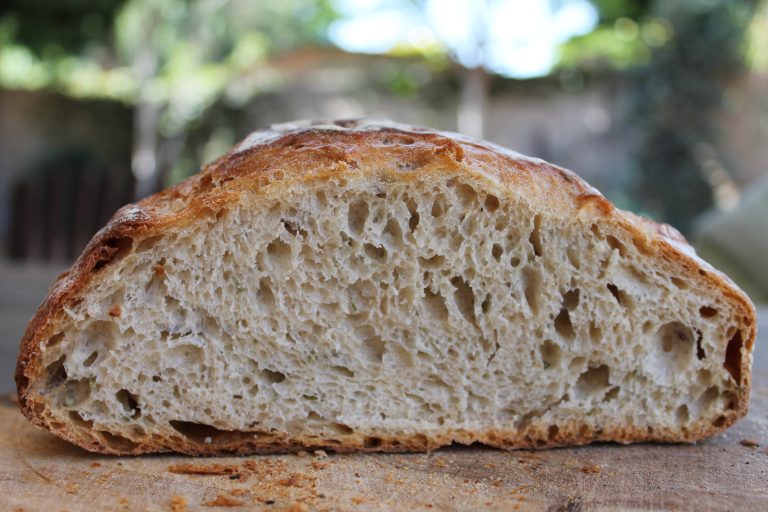
Through much trial and error, I have learned what works and what does’nt work in the process of baking my own bread. My loaves are usually delicious but not always perfect. (The photo on this post is one of my first loaves) I have incorporated many recipes and techniques from bakers all over the world. In the end I have learned to celebrate even the most ragged-looking loaf of whole-grain bread that comes out of my oven.

Be patient and observe the process. It can be frustrating at times. When you make mistakes (yes, you will!) take a picture, laugh and try again another day. Take notes and hang in there.  I think you’ll find the result to be rewarding and very satisfying.

This loaf of organic 100% whole grain, sourdough leavened bread is my Saturday bread. It’s the one I make to get me through the coming week. It’s perfect for French toast, grilled cheese sandwiches or just slathered with bread and jam for afternoon tea. When it gets a bit stale, (it won’t last for that!) cut it up into cubes, toss it with olive oil and garlic and bake up some croutons.

Sourdough Country Bread Loaf
Print Pin

Sourdough Country Bread Loaf

Course Breakfast, Dinner, Lunch
Cuisine Global
Keyword Baking, Bread
Cook Time 10 hours hours
Total Time 10 hours hours
Servings 8

Ingredients

Levain

  • 25 grams sourdough starter wild yeast
  • 100 grams all-purpose flour organic preferred
  • 25 grams whole wheat flour organic preferred
  • 125 grams purified water

Final Bread Dough

  • 350 grams white bread flour organic preferred
  • 50 grams whole wheat flour organic preferred
  • 275 grams purified water lukewarm - 100°
  • 10 grams Kosher salt or sea salt
  • 200 grams sourdough levain that you mixed at the beginning

Instructions

  • Early in the morning, at least an hour before you begin making your bread dough, take out 25 grams of your starter and drop it into a clean container. Add 100 grams white bread flour, 25 grams whole wheat flour and 125 grams of purified water. Give it a stir and let it bubble and mingle for at least an hour. This is how you mix your levain.
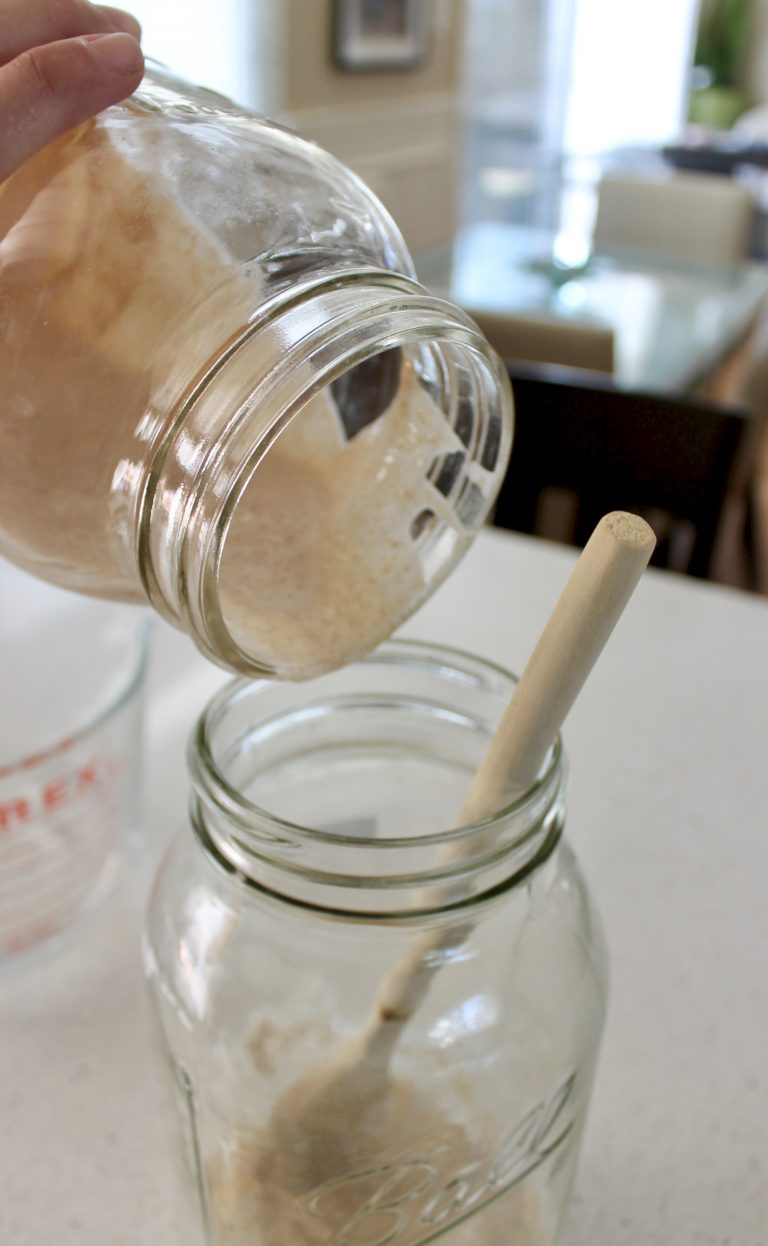
  • Check your levain/starter after about an hour and do a "float" test. Scoop out a spoonful of the yeast and drop it into a cup of water. If it floats to the top, your levain is ready for you to begin mixing your bread dough. If it sinks, WAIT. Check back in another hour to see if it's floaty. Once it floats, proceed to mix your dough.
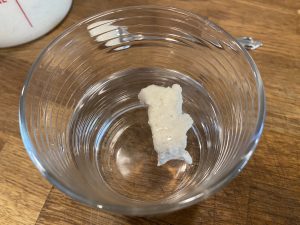
    Float Test
  • Tip: Weigh out flour first into one container. Then weigh out water in a separate container.
  • The dough should be 78° when you are finished mixing. Water is a big factor that will effect final temperature. Use a thermometer to check water and dough temperature. Write down the temp of the water you use so you can adjust it the next time. Target temperature should be 78°.
  • Pour 275 grams of water into a mixing container. Add 200g of the levain, (sourdough) that you mixed up earlier, to the water. Use your hand to swirl the sourdough into the water.  Break up any clumps and get it totally mixed together in a cloudy water sort of situation.
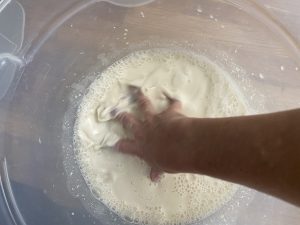
    Levain & Water
  • After sourdough/water is completely mixed, add in the flour and mix with your hand to incorporate. It should resemble a shaggy, slightly wet dough. Once the flour is incorporated let the dough rest for 30 minutes. Do not add the salt yet.
  • This 30-minute resting period is called the autolyse. During autolyse the flour absorbs the water and begins to develop dough strength. Set a timer and after thirty minutes, add the salt. If necessary, add a few dribbles of water if the dough is really stiff. Mix with your hand to combine.
  • When mixing I use a "pinch and fold" method; pinching or squeezing the dough with my fingers until it becomes longer, like a fat snake. The pinching helps to evenly distribute the salt. Then I fold the dough 4 times and pinch again. Turning the container and folding and pinching, folding and pinching for about 8-10 minutes.
  • Check the dough temperature. You want it to be 78°. If it's too warm, place it in the fridge to cool it down for a couple of minutes. If it's too cold put it in a warm place in your kitchen.
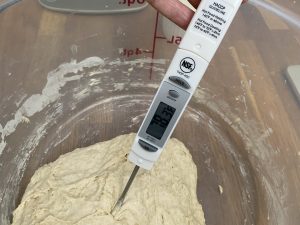
    Dough Temperature
  • At 78° the dough should take about 3.5 hours to finish its first rise. During those 3.5 hours you will knead the dough every 30-45 minutes. You will do this right inside the container, not on the counter. The dough will get noticeably stronger and more elastic with each fold.
  • Folding means taking the ball of dough, stretching it until just before it tears, and folding it back down onto itself. By doing this the dough gets strength and the temperature gets evenly distributed.
    When folding, work your way around the mixing bowl until you have made a full rotation of the bowl. For me, it is about 4 folds total each time. You should feel the dough becoming less stretchy and more elastic each time you go back to the container to fold it. Ken Forkish has a great video demonstrating this method of folding the dough.
  • When the dough has completed its first rise it will have risen about 30% in volume. I use a clear plastic container with measurements on the outside so I can see the dough rise and fall with each fold.  You can also put a piece of tape at the dough line so you can see how much rise occurs.
  • After about 3-3.5 hours it’s time to shape your dough. Dust your work surface with rice flour (or wheat flour if you do not have any rice flour) and turn the container over, letting the dough release and fall onto the countertop
  • Shape the dough into a boule or round by folding just as you did when the dough was in the container. Once you've made a full rotation of folds, flip the dough over using a dough scraper or your hands, and gently work dough into a circular ball shape.
  • Remember: Shaping takes years to get really good at. Be patient, it’s easy to get frustrated, but you will get this over time. It takes practice.
  • Grab a bowl or basket big enough to hold the loaf. A colander works really well for this too. Line it with a clean lint free kitchen cloth and dust generously with flour. Pick the loaf up and place it into the "basket" you've created, seam side down. The seams will become the top of the loaf once baked and will open naturally as the dough expands.
  • Let the dough do a second rise (also called proof) in the fridge.
    Proofing allows the dough to rise just a bit more and adds flavor.
    Note: You can proof your basket of dough on the counter for 1 hour, if you want to fast track this loaf and bake it in the same day. Pre-heat your oven to 500° while dough is proofing on the counter. Continue with steps to bake following proof.
  • If refrigerating, stick the basket/bowl of dough, kitchen towel and all into a plastic bag to prevent the loaf from drying out or creating a "skin" over the top. Put it in the fridge between 12-24 hours.
  • One hour before baking, pre-heat oven to 500°. Use a cast iron or ceramic pot (LeCreuset, Lodge, etc.) to bake your loaf in. I use the combo cooker by Lodge. Put the cast iron pot and lid into the oven. Allow oven and pot to heat for one hour.
  • After an hour of pre-heating remove your loaf from the fridge. Dust with flour to avoid any stickiness.
    Remove pot from oven. (Use oven gloves! The pot gets VERY hot and steamy and it’s easy to get burned. The scars on my forearms are evidence of this.) Keep oven gloves nearby. You are going to pull the pot out of the oven, set it on the stove top, and open it up. Smoke and steam will come out. It's very hot!
  • Still wearing the oven gloves, turn out your dough from your proofing bowl/basket into your gloves. The loaf should not stick, if it does, try to remain calm, and gently ease it out. (Make a note to use more flour next time.)
    Carefully place the loaf into the shallow/lid side of the cast iron pot. Put pot lid back on and put the pot into the oven.
    Nice job!
  • Bake for 25 minutes. After 25 minutes put on your oven gloves and remove the lid of the pot, being VERY careful as steam will, again, come out from underneath. Turn the oven down to 450° and let bread bake another 15 minutes.
  • Each oven is different, so keep your eye on the loaf, checking for color. When the loaf is done it should be dark brown, like dark chocolate. Remove the pot from the oven and place loaf on wire rack to cool.
  • Turn that oven off! Tap on the bottom of the loaf. It should sound hollow thudding sound, like a drum.
  • Resist the temptation to slice into your loaf to eat it warm. Bread develops even more flavor as it cools. Allow to completely cool for two hours before slicing.
  • It's a long process, but you’ll love the taste of the final bread. And you’ll get lots of compliments. If you enjoy it, try it again. Practice makes perfect, if you decide to stick with it. There are TONS of methods and recipes all over the internet to try out. My favorites for learning were Ken Forkish’s book, Flour Water Salt Yeast and the Tartine Cookbook.
  • Have fun and happy baking!

Filed Under: Baking, Companions, Tips

How to Feed a Sourdough Starter

May 10, 2020 by How Did You Cook That

Wild Yeast Starter

If you’ve already got a sourdough starter in the kitchen, you will need to maintain a daily feeding schedule to keep it alive and thriving.

You can feed it with any flour that you have on hand, just DO NOT use bleached flours. All-purpose UNBLEACHED flour is fine. I always use organic flour as well. For a more sour and vigorous yeast, use whole wheat or rye flour. If your dough gets too sour, you can transition it to a milder yeast by using all-purpose flour for the next several feedings.

If you are going to be out of town or just want to take a break from feeding your yeasty baby, just cover it and pop it into the fridge. It will keep for up to 3 months.

When you take it out of the fridge, it may look dead or have a liquid floating on top. That’s ok. Stir it and smell it. If it smells like strong beer or wine or strong yeast, that’s a good sign. If it smells like nothing, that’s ok too. If it smells rotten or rancid, it probably is. The liquid that floats on top is fine. It’s called “hooch,” and it’s just a message from your yeast that it wants to be fed. Stir it down and feed your starter.

Sourdough starters are pretty resilient. It’s tough to kill these guys with regular maintenance. Hot temperatures and neglect will be the death of your wild yeast. Keep it cool (72F – 80F) and fed and it will reward you well.

The flour to water ratios in this recipe are what I use to keep waste to a minimum. You can change the amount of flour and water that you use in your starter depending on how much bread you bake with it. You just need to maintain a ratio of 100% flour to 100% water. Any weight or combination of flours is fine. I typically keep 15-25 grams of starter, then add 100 grams of purified room temperature water then add 100 grams of various flours.

Jump in, be patient and enjoy experimenting in the world of fermentation.

Wild Yeast Starter
Print Pin

How to Feed a Sourdough Starter

How to feed a wild yeast sourdough starter for homemade bread
Cuisine Global
Keyword Baking, Bread, Sourdough
Prep Time 10 minutes minutes
Total Time 10 minutes minutes

Ingredients

  • 25 grams starter
  • 50 grams unbleached all-purpose flour or bread flour (organic optional)
  • 50 grams rye or whole wheat or any combination of flours that you have on hand (organic optional)
  • 100 grams purified spring water

Instructions

  • Every day, at the same time, pour off 2/3 of the culture, keeping only about 25g. (It’s a good idea to put the 25g seed culture into a clean jar to mix the next day’s batch. I rotate two jars back and forth every morning.)
  • Mix together all-purpose flour, whole wheat flour and purified water. Mix well and cover. Try using a coffee filter secured with a re-used produce rubber band. This allows the live culture to continue gathering wild yeast from the air around you.
  • If you forget to feed, don't worry. Just feed once you remember. Sourdough's are pretty resilient and will not "die" easily.
  • If you don't want to feed daily, keep the sourdough starter in the fridge.

Filed Under: Baking, Companions, Tips

Sourdough Pancakes

May 10, 2020 by How Did You Cook That

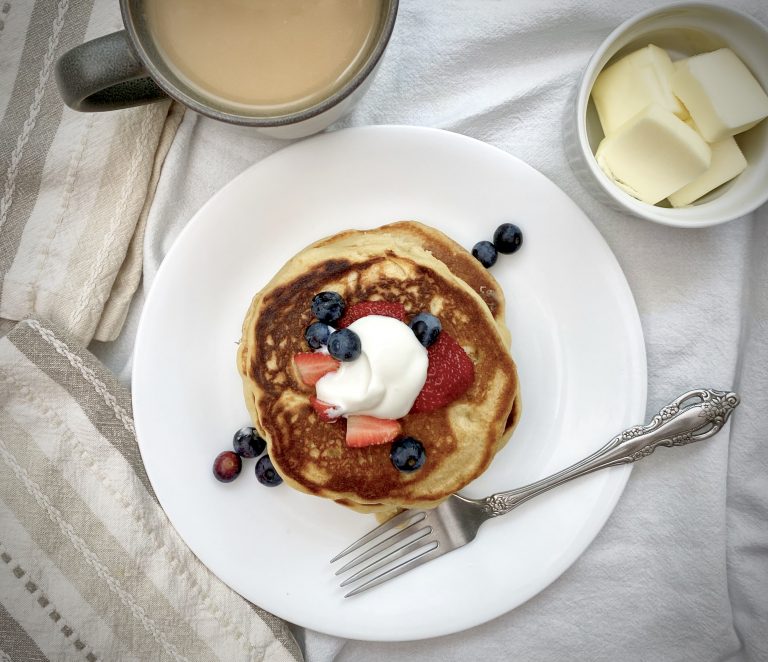
Sourdough Pancakes

Anyone who knows me knows how much I love to bake bread. My friends and family are now used to the jars of fermenting yeast on my kitchen shelves. But sometimes, those jars of wild yeast seem to multiply and the discarded sourdough often gets…well…discarded.

I really hate that. Reuse, re-purpose, recycle is my mantra and I try to stick to that principle whenever I can. One of the ways I re-purpose my discarded wild yeast is to make sourdough pancakes. I feed my wild yeast starter in the morning, so using it for that day’s breakfast makes perfect sense to me.

If you make sourdough bread at home and have a starter or two on the shelf, try this recipe and see how you like the flavor of your pancakes. They are yeasty-good and a bit heavier than typical pancakes. That’s because sourdough starters are often fed with heavier flours like rye and whole wheat. You can always lighten it up a bit by adding less starter and a bit more all-purpose flour.

Sourdough Pancakes
Print Pin

Sourdough Pancakes

Prep Time 10 minutes minutes
Cook Time 10 minutes minutes
Total Time 20 minutes minutes
Servings 4
Cost $8

Ingredients

  • 2 large eggs
  • maple syrup
  • 1½ cups whole milk reduced fat is ok too
  • ¼ cup Greek yogurt or sour cream optional
  • 1 cup sourdough starter stirred down
  • 1 tsp vanilla
  • 1½ cups all-purpose flour also use whole wheat, einkhorn or any mix of flours you like
  • 1 tsp baking soda
  • 1 tsp baking powder
  • 2 tsp Kosher salt
  • ⅛ cup granulated sugar or raw, brown sugar-very lightly packed
  • ¼ cup (½ stick) butter melted

Instructions

  • Heat the maple syrup. Because pouring cold syrup over a stack of steaming hot pancakes makes no sense at all!
  • Sift together flour, baking soda, baking powder, salt, and sugar.
  • Beat eggs in a medium bowl. Add milk, yogurt or sour cream, sourdough starter, and vanilla to the eggs. Mix just to combine. Do not over mix.
  • Add dry ingredients to the egg mixture, stirring to combine. Lumps are ok. They help to create the pockets of air that make pancakes fluffy.
  • Stir in melted butter. Set bowl aside and wait about 30 minutes to let the batter rise a bit.
  • Make some coffee, gather up some toppings or take a shower. 🙂
  • Lightly spray a skillet and heat on medium high until sizzling. Turn heat down to medium and drop the batter in spoonfuls onto the skillet. Cook until light brown and bubbles start to appear on top, then flip to cook the other side, about 1 minute. Flip only once.
  • You might need to adjust the amount of milk depending on the stiffness of your sourdough starter and your preferred batter consistency. The above ingredients work well for my sourdough starter; if you’re using a stiff starter, you might want to add around 1/2 cup more milk.

Filed Under: Baking, Breakfast, Desserts

Chilaquiles Rojos with Eggs

May 7, 2020 by How Did You Cook That

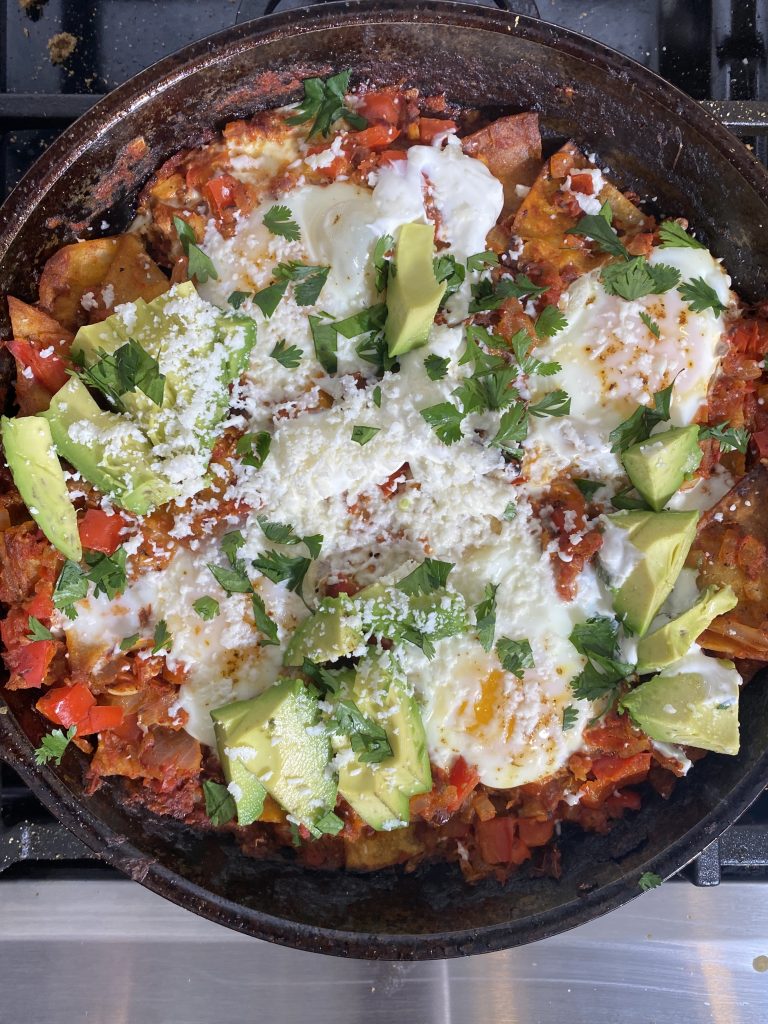
Chilaquiles Rojos

Breakfast is my favorite meal of the day. And Mexican food is one of my favorite cuisines. So when I’m eating out, Chilaquiles Rojas is the first thing I order from the breakfast menu.

Crunchy tortillas surrounded by smoky red chili sauce and topped with fried eggs. Oh, and the crema and cotija drizzled over it. Seriously, the stuff dreams are made of.

Somehow I thought this dish was magical and must be prepared by angels in the kitchen. Then one day I created chilaquiles in my own kitchen and changed breakfast at home, forever. Holy smokes! These are so easy to make. Chilaquiles are totally customizable too. Egg or no egg, refried beans, shredded chicken, extra chiles and avocado. All are up for grabs. Just use whatever you’ve got on hand.

This chilaquiles recipe gets a bold flavor from charring the onions, tomatoes and garlic in the oven before adding it to the sauce. It’s the perfect dish to make for weekend guests, just waking up from a night of merriment (and a few cocktails).

Mix up a pitcher of Bloody Maria’s to go alongside this yummy meal and enjoy every single bite.

Chilaquiles Rojos
Print Pin

Chilaquiles Rojas with Eggs

The name Chilaquiles comes from the Nahuatl language, meaning chilis and greens. Fried tortilla triangles, rich red chile sauce, eggs and cream come together to make a delicious Mexican breakfast platter.
Course Breakfast, Brunch, Dinner
Cuisine Mexican
Keyword Chilaquiles, Eggs
Prep Time 30 minutes minutes
Cook Time 20 minutes minutes
Total Time 50 minutes minutes
Servings 4

Ingredients

  • 12 fresh corn tortillas
  • 1½ pounds (about 3) large tomatoes Roma tomatoes are fine too
  • 1 medium red onion
  • 1 whole head garlic
  • olive oil for drizzling over tomatoes and garlic
  • ¼ cup canola oil for frying tortillas
  • 1 can chipotle chiles in adobo remove 3 chiles and store the rest of the can for later
  • 1 Tbsp canola or peanut oil
  • 1¼ cup vegetable or chicken broth
  • 4 large eggs
  • 1 bunch fresh cilantro optional
  • 2 avocados optional
  • 1 pint Mexican crema or sour cream optional
  • 8 ounces queso fresco or cotija optional
  • refried beans optional

Instructions

  • Move an oven rack to the top position. Pre-heat oven to 400°.
  • Cut the top off of the garlic head and drizzle with a little olive oil. Set garlic in an oven safe dish and put in pre-heated oven for 5 minutes while you are prepping your tomatoes and onion.
  • Cut the tomatoes in half. Cut the onion into 1 inch wedges. Place in a 9 x 9 oven dish, drizzle with a little olive oil and put on the rack next to the garlic. Broil for another 15 minutes.
  • While the vegetables are roasting, cut tortillas into triangle shaped wedges. Heat ¼ cup of oil in an oven safe skillet until shimmering. Fry the tortilla wedges in batches until golden and crispy. Remove to a paper towel lined plate and set aside.
  • Remove vegetables from the oven and allow to cool for a few minutes.
    (Do not turn off the oven.)
    Press the garlic head and squeeze the cloves out of their skins.
  • Place tomatoes, onions, garlic cloves, 3 chipotles in adobo and ½ cup broth in a food processor or blender and pulse until just blended but not pureed.
  • Heat 1 Tbsp oil in a skillet and add the sauce to the skillet. Stir over medium heat for about 10 minutes adding broth as needed to get the sauce to the consistency of a juicy, chunky salsa.
  • Add the tortilla chips and stir carefully to coat the chips. Cook until the tortillas are heated through but not broken, about 3 minutes. Taste and season with salt as needed.
  • Make 4 little wells in the salsa. Break each egg into each well and cook for 1 minute, then place the skillet in the oven for another minute until eggs are cooked to your preference.
  • Remove from oven and serve hot from the skillet, family-style.
  • You can top it all with crema, cotija, cilantro, avocado, refried beans or anything else you like OR serve the toppings in bowls for your guests to make up their own plates.

Filed Under: Breakfast

Easy Banana Zucchini Bread

May 7, 2020 by How Did You Cook That

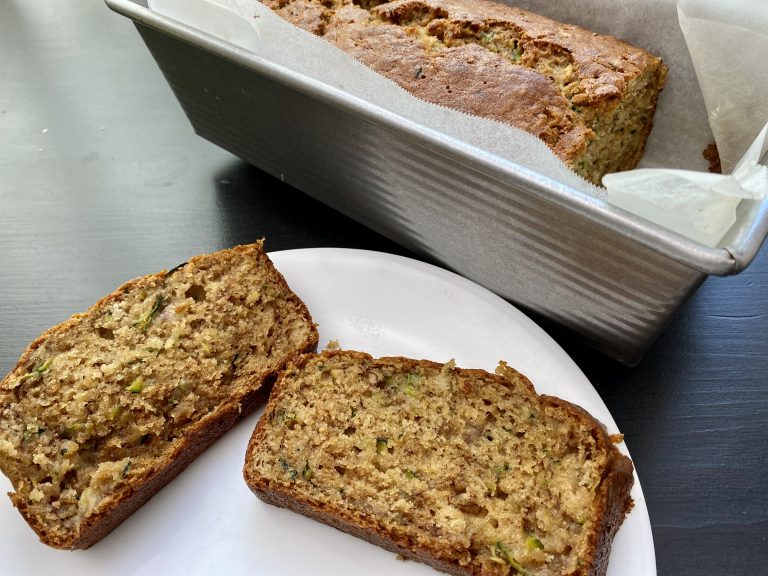
Banana Zucchini Bread

This Easy Banana Zucchini Bread recipe lives up to its name. And it’s so moist and delicious, you might just eat the whole pan in one sitting. 

This quick bread is easy to make and the added spices will make your kitchen smell heavenly. You’re gonna love this recipe.

Banana Zucchini Bread packs a one-two punch using your over-ripe bananas and the surplus of zucchini in the garden at the same time.

I love this time of summer in the garden.  It’s when I get to bake up loaves of delicious banana zucchini bread to share with friends.

Banana Zucchini Bread
Print Pin

Easy Banana Zucchini Bread

Easy Banana Zucchini Bread is the perfect way to use up all that zucchini in the garden plus any over-ripe bananas on the counter.
Course Brunch, Dessert, Snack
Keyword Banana, Cake
Prep Time 10 minutes minutes
Cook Time 50 minutes minutes
Total Time 1 hour hour

Ingredients

  • 1¾ cup all-purpose flour
  • 1½ tsp baking powder
  • ½ tsp baking soda
  • 1 tsp Kosher salt
  • 1 Tbsp ground cinnamon
  • ½ tsp cardamom
  • 2 ripe bananas
  • 2 cups grated zucchini
  • 3 Tbsp coconut oil
  • 2 large eggs lightly beaten
  • 1 tsp vanilla extract
  • ¾ cup granulated sugar

Instructions

  • Preheat oven to 355 °.
  • Prepare 9x5 bread pan. Cover with parchment paper and lightly coat with butter or baking spray. Dust with flour. Set aside.
  • In a bowl combine flour, cinnamon, cardamom, baking soda, baking powder and salt. Set aside.
  • In a medium bowl mix together sugar and eggs until well combined.
  • In a large bowl mash the bananas with a fork. Grate the zucchini and add to the bowl. (No need to press out the water from the zucchini. You want that for a super moist bread)
    Add sugar and eggs. Stir to combine. Add coconut oil and vanilla. Give it one more stir to combine all the ingredients.
  • Gradually add the flour mixture while stirring and mix together to combine. Don't over mix. It's ok if there are a few lumps.
  • Pour batter into prepared loaf pan. Bake 40-50 minutes until top is brown and slightly splitting. It should spring back when touched. Or do the toothpick thing and see if it comes out clean.
  • Let bread cool before slicing. This quick bread will keep in the refrigerator for about 4 days. It freezes easily and will keep frozen for up to 4 months.

Filed Under: Baking, Bites and Tastes, Breakfast, Desserts

Baked Macaroni and Cheese

May 6, 2020 by How Did You Cook That

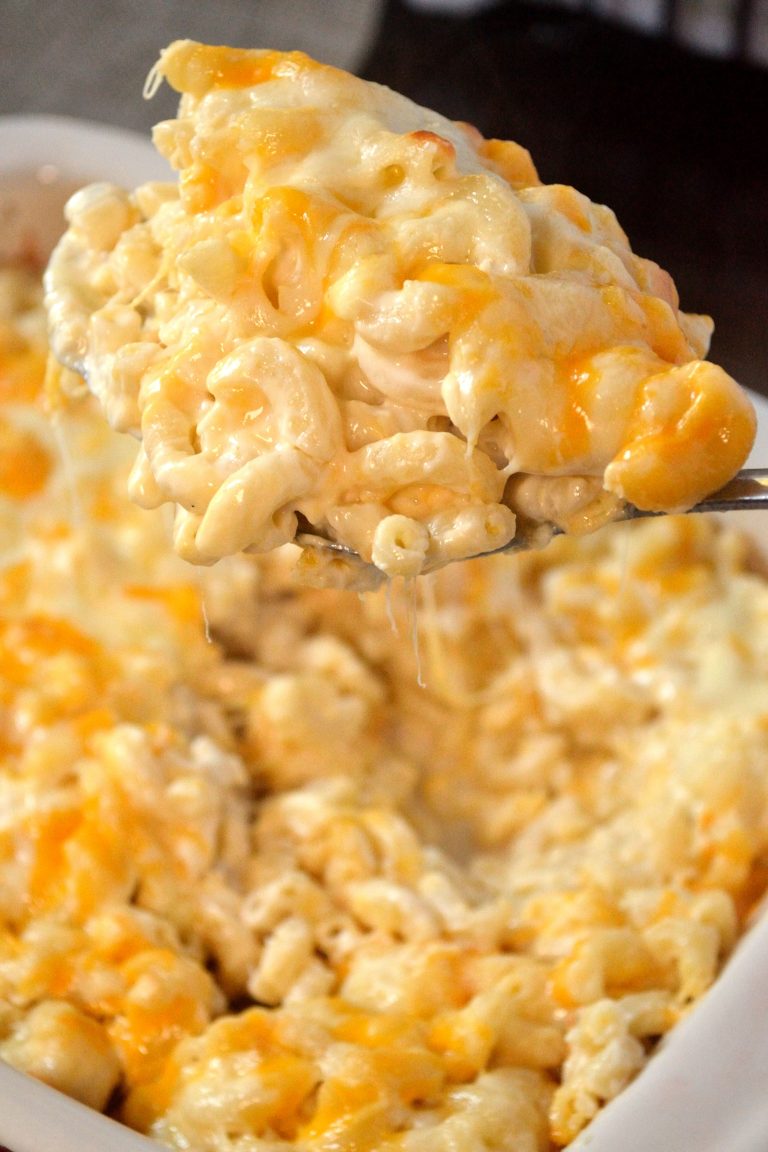
My kids love crispy creamy baked macaroni and cheese. Not the blue boxed stuff; the real baked cheesy deal. I think they learned to love it when we lived in the South. There, everyone serves mac ‘n cheese as a side vegetable.

For this recipe, make it count. Grate sharp cheddar cheese fresh from the block. Pre-shredded cheese won’t give you that great sharp bite. It also won’t melt smoothly into creamy goodness while it cooks.

This Baked Macaroni and Cheese recipe is destined to become your favorite. And no, it’s still not a vegetable.

Baked Macaroni and Cheese
Print Pin

Baked Macaroni and Cheese

Creamy cheesy baked macaroni and cheese. Baked to a golden brown and melting in your mouth with every bite. This yummy comfort food dish takes only a few minutes to prepare and is on the table in less than an hour.
Course Appetizer, Main Course
Keyword Cheese, Pasta
Prep Time 15 minutes minutes
Cook Time 20 minutes minutes
Total Time 35 minutes minutes
Servings 6

Ingredients

  • 8 ounces elbow macaroni (or any shape that you like) cooked
  • 2 cups milk
  • 2 Tbsp butter
  • 2 Tbsp flour
  • 1 tsp salt
  • 1 tsp onion powder
  • 1 tsp red pepper flakes
  • 8 ounce sharp cheddar cheese
  • 1 ounce parmesan cheese

Instructions

  • Preheat oven to 400°.
  • Cook pasta according to package directions. Drain and set aside.
  • Grate cheeses together into a medium bowl. Set aside.
  • Heat milk to warm it but not boil it. Just 1½ - 2 minutes.
  • Make a basic cream sauce (or bechamel). Melt butter in a large skillet or Dutch oven over medium-low heat; whisk in flour until smooth. Cook, whisking constantly, 1 minute.
    Gradually whisk in warm milk, and cook, whisking constantly, about 5 minutes until thickened.
  • Whisk in salt, red pepper flakes and 1 cup shredded cheeses. Stir in pasta. Pour pasta mixture into a lightly greased 2-qt. baking dish. Layer on remaining cheeses. Bake at 400° for 20 minutes. Top will be golden brown and center will be bubbling.

Filed Under: Bites and Tastes, Companions, Main Dishes

Easy Flat Bread

May 6, 2020 by How Did You Cook That

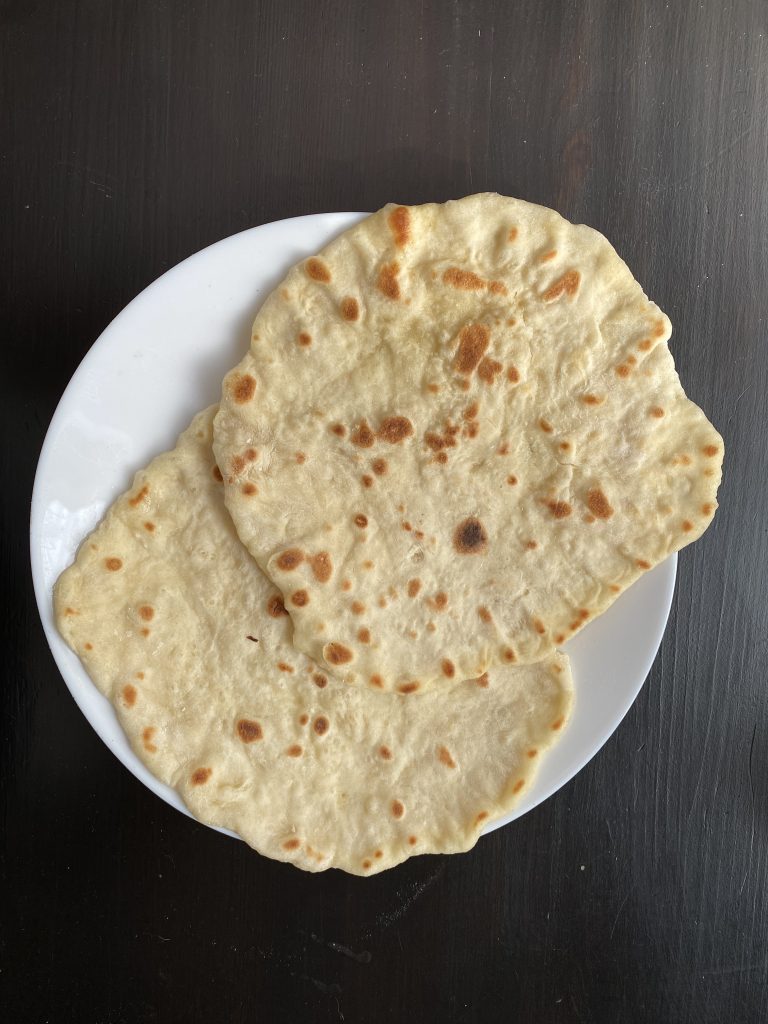
I love the simplicity of flatbreads. Flour, water, yeast, a quick rise and roll then fry it up in a pan. Pizza, roti, pita, lavash, bing bread and bong bread. I spent years craving flatbreads and eating plates full of them but never thought I could learn to make flatbread myself.

Then I was challenged watching chef David Chang make his version of bing bread. Of course he never shares his recipe, just his method. So, it took a few tries to get just the right dough and texture. It may not be the bread they serve at Majordomo, but it’s pretty damn close and just as delicious.

This flatbread is called bing bread in China and bong bread in Korea. I couldn’t make up my mind about what to call it so I named it both. Bet you thought it was a typo and I meant to call it Ping Pong, didn’t you?

Make a bowl of hummus or sour cream with chopped dill while you’re at it. Trust me, you’ll devour this bread in minutes.

Bign Bong Bread
Print Pin

Bing Bong Bread (Flatbread)

Bing is a flour and yeast based Chinese flatbread. Bong is the Korean name for this bread. Delicious served with honey butter or hummus.
Course Dinner, Lunch, Snack
Keyword Bread, Flatbread
Prep Time 10 minutes minutes
Cook Time 5 minutes minutes
1 hour hour
Servings 4

Ingredients

  • 4 cups all-purpose flour
  • 2¼ tsp active dry yeast
  • 3 Tbsp sugar
  • 1 Tbsp Kosher salt

Instructions

  • Combine yeast, sugar and salt with 2 cups very warm (but not hot) water in a large bowl. 110° - 114° Whisk to dissolve. Let sit until foamy, about 5 minutes.
  • Add 4 cups flour and mix with a wooden spoon until dough comes together in a shaggy ball with only a few dry spots of flour remaining. Cover with plastic wrap and let sit in a warm place until doubled in size, 50–70 minutes.
  • Once dough has doubled in size, punch down and transfer to a well-floured surface. Knead dough adding flour, as needed, a tablespoonful at a time if dough is very sticky. Knead until smooth (dough should be very soft, pliable, and slightly sticky).
  • Divide dough in half. Generously flour work table. Portion out dough into softball sized balls. Roll each ball around to firm up. Set each ball aside and cover with a towel. You should have about 8-10 balls of dough. Allow to rest for 10 minutes.
  • Heat 1 Tbsp olive oil on a skillet or griddle until shimmering hot.
  • Roll out a ball of dough with a rolling pin or bottle, pressing out further with your fingers. Roll into a flat disc about ¼ in thick.
  • Use a dough scraper or spatula to help lift it from work surface and set it on the hot skillet. Bread will rise slightly and bubble. Lift the edge of bread to see if it is brown on the underside, then flip. Cook another 15-20 seconds and remove to towel-lined plate.
  • Continue this process until all the balls of dough are cooked. Serve warm with hummus, honey and garlic or sour cream and fresh dill.

Filed Under: Baking, Bites and Tastes

Pan Tossed Vegetarian Noodles

April 25, 2020 by How Did You Cook That

Pan Tossed Vietnamese Noodles

In my neighborhood there is this amazing Vietnamese Cafe. The food that comes out of that kitchen at Gingergrass Cafe is outstanding. When I had my first taste of their pan tossed noodles I realized I might be eating dinner there every night for the rest of my life.

Obviously that was a wee bit impractical, so I had to come up with a way to recreate these binge-worthy noodles in my own kitchen. 

As it turns out, pan tossed Vietnamese noodles are really pretty simple to make. You just need a few basic ingredients, something to chop with and a big pan.

These noodles are a big crowd-pleaser and a super cozy comfort food. On your next shopping trip stock up on extra noodles because these are insanely addicting.

Pan Tossed Vietnamese Noodles
Print Pin

Pan Tossed Vegetarian Noodles

Chewy crispy pan tossed Vietnamese noodles. Made with fresh vegetables and soba noodles, this dish is the perfect weeknight dinner.
Course Dinner, Lunch, Main Course
Cuisine Global
Keyword Noodles, Vegetarian
Prep Time 25 minutes minutes
Total Time 25 minutes minutes
Servings 4

Equipment

  • Large skillet or wok

Ingredients

  • 12 ounces soba, ramen or udon noodles I use soba noodles for this recipe but use whatever Asian noodle is available at your local store
  • 8-10 scallions
  • 3 garlic cloves minced
  • ½ cup broccoli florets cut into small pieces
  • ½ cup shredded cabbage
  • ¼ cup carrots peeled and julienned
  • 4-5 bok choy florets or baby spinach chopped
  • ¼ cup low sodium soy sauce
  • 2 Tbsp oyster sauce
  • 2 Tbsp sugar brown or white
  • ½ tsp red pepper flakes
  • 2 Tbsp toasted sesame oil plus a teaspoon for sauce
  • 3 Tbsp canola oil
  • ¼ cup mung bean sprouts

Instructions

  • Bring a large pot of water to boil. You don't need to salt the water for Asian noodles.
  • While the water is heating up, slice the scallions lengthwise then cut them into one-inch pieces. Separate the green parts of the onions from the white parts. Set aside.
  • Slice cabbage into shreds, wash bean sprouts, chop bok choy or spinach very roughly. Chop broccoli, julienne carrots or any other vegetables you are using. Set aside.
  • In a small bowl, combine the oyster sauce, soy sauce, sugar, minced garlic, red pepper flakes, and 1 teaspoon of sesame oil. Stir to combine. Set aside.
  • In a small bowl or ramekin, mix the canola oil and toasted sesame oil.
  • When the water comes to a boil, add the noodles and boil for 2-3 minutes (according to package directions). Do not overcook, they are better al dente. Drain and rinse with cold water. Leave in the strainer until ready to use.
  • Heat a wok or large skillet over high heat. Let the skillet heat for several minutes until it becomes very hot.
  • Drizzle in 2 Tbsp combined sesame and canola oil. When the pan becomes very hot again and the oil starts to shimmer, add the noodles and spread out to a thin, even layer. Gently swirl the pan so the oil evenly coats all the noodles. Cook the noodles for 5-6 minutes or until they become golden and lightly crisp.
  • Flip the noodles over, in sections if necessary, using a large spatula. Pour 2 more tablespoons of sesame/canola oil mixture around the outside edges of the noodles and swirl the pan to allow the oil to evenly coat the noodles. Let the noodles fry for an additional 3-5 minutes. Remove the noodles to a plate.
  • In the same skillet or wok, heat remaining oil. Add the white part of the scallion and let sizzle for just a few seconds.
    Add the shredded carrots, broccoli, and any other chopped vegetables you are using, and let cook for an additional 30 seconds.
    Add the noodles back into the skillet and toss. Separate the crispy parts of the noodles with a fork or pair of tongs to remove any that are stuck together.
    Pour on the soy sauce mixture. Toss until the sauce evenly coats the noodles.
  •  Garnish with remaining green onion tops and mung bean sprouts. Serve hot.
  • Note: This recipe is totally adaptable. Add any fresh, crunchy vegetables that you have on hand. More or less of any that are listed. Make it your way. If you want to add an animal protein, just toss with grilled chicken or shrimp.

Filed Under: Main Dishes, Vegetarian

Creamy Thousand Island Dressing

April 24, 2020 by How Did You Cook That

Creamy Thousand Island Dressing from Scratch

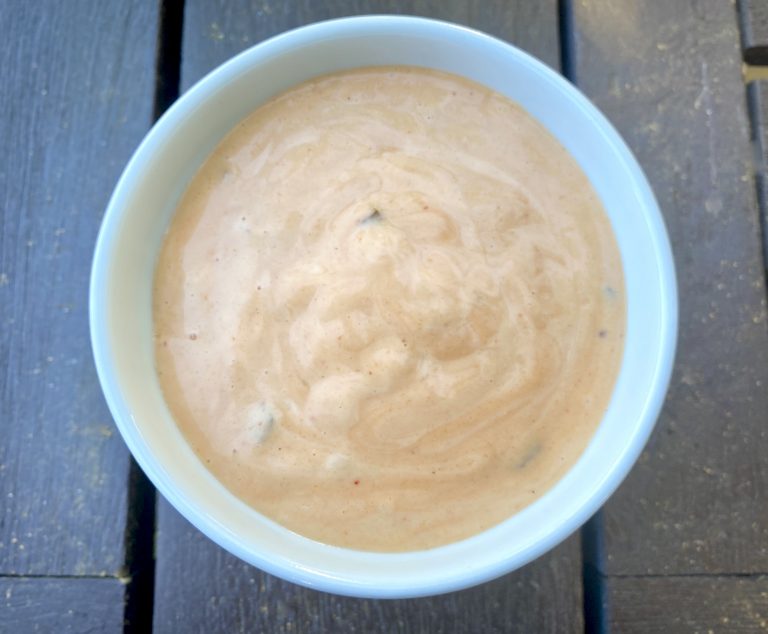
This simple recipe is my go-to condiment whenever I make a batch of animal style French fries. It has a fresh taste and I usually find the ingredients for it in my fridge before I find a ready-made bottle from the store.

It’s a good stand in for tartar sauce for fish sticks. That finicky kid in your house will love it. This sauce is also a pretty tasty for dip for steamed artichokes.

Creamy Thousand Island Dressing from Scratch
Print Pin

Creamy Thousand Island Dressing

Fresh Thousand Island Dressing made from scratch. Perfect topping for French fries, fish sticks or steamed artichokes.
Course Condiment
Keyword Dip, Dressing, Salad
Prep Time 5 minutes minutes
Total Time 5 minutes minutes
Servings 4

Ingredients

  • 1 cup good mayonnaise Best Foods or Hellmans
  • 3 Tbsp ketchup
  • 1 Tbsp vinegar
  • 1 Tbsp sugar
  • 3 Tbsp sweet pickle relish
  • 1 Tbsp yellow onion finely minced
  • salt and pepper to taste

Instructions

  • Mix all the ingredients together in a bowl. Use immediately and store the rest in the refrigerator for up to 2 months.

Filed Under: Companions, Sauces

Animal Style French Fries (Copy Cat Version)

April 23, 2020 by How Did You Cook That

Animal Style French Fries (In N Out Copy Cat)

When it comes to making Animal style French fries at home, I might have a slight advantage. My son worked at In-N-Out when he was in high school and possibly, just maybe he shared a few tips with me along the way.

The best tip I leaned to get that unique In-N-Out taste: add a little yellow mustard to the grill before tossing on the burgers. Or in this case, the skillet you saute your onions in.

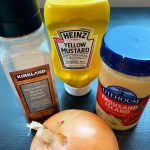
Animal Style Sauce Ingredients
Print Pin

Animal Style French Fries (In-N-Out Copy Cat)

When you can't get to In-N-Out Burger to satisfy your craving for Animal Style French Fries, this quick and easy copycat version will make your day. Be sure to make A LOT of extra.
Course Appetizer, Side Dish, Snack
Keyword French Fries, Potatoes
Prep Time 20 minutes minutes
Total Time 20 minutes minutes
Servings 4

Equipment

  • Vegetable Spiralizer (optional)

Ingredients

  • 3-4 organic Russet potatoes scrubbed clean and spiralized using thick setting
  • ½ large brown onion finely chopped
  • 1 cup Thousand Island dressing store bought (use your favorite brand)
  • ⅛ cup yellow mustard
  • 2 Tbsp neutral cooking oil canola or peanut
  • 2 cups peanut oil or canola oil
  • Fresh ground pepper to taste
  • grated cheddar cheese for topping optional

Instructions

  • Spiralize the potatoes using the thick setting on your spiralizer. (If you don't have a spiralizer, julienne slice the potatoes with a kitchen knife.)
  • Heat 2 Tbsp oil in skillet and add chopped onions. Saute until soft but not too browned.
  • Add yellow mustard to the onions and saute for another minute.
  • Add Thousand Island dressing to the mix and saute for another minute. Turn heat off and set aside until potatoes are fried.
  • Heat 2 cups of oil in a skillet until shimmering. Make sure oil is very hot or the potatoes will stick to the bottom of the pan.
  • Add potatoes in batches, not over-crowding them so that they move about freely in the skillet.
  • Once the potatoes are browned, remove from oil and set on a paper-towel lined plate or screen to drain.
  • Once potatoes are fried, plate them and spoon the onion/Thousand Island mixture over the top. Sprinkle with fresh ground black pepper and grated cheddar cheese if you like that.
  • Put on a bib and enjoy every single crunchy, gooey bite.

Notes

When talking through this recipe with a friend, she asked if she could make her own Thousand Island if she didn't have any on hand. The answer to that is YES!
For fresh Thousand Island Dressing from scratch mix all the ingredients below together in a bowl. Use immediately and store the rest in the fridge for up to 2 months.
1 cup good mayonnaise
3 Tbsp ketchup
1 Tbsp vinegar
1 Tbsp sugar
3 Tbsp sweet pickle relish
1 Tbsp finely minced onion
Salt and pepper to taste

Filed Under: Companions, Tips

  • « Go to Previous Page
  • Page 1
  • Page 2
  • Page 3
  • Page 4
  • Page 5
  • Page 6
  • Interim pages omitted …
  • Page 9
  • Go to Next Page »

Primary Sidebar

Hi food lovers. Welcome to my kitchen.

If you're looking for simple dishes made with wholesome, seasonal ingredients, you've come to the right place. Grab a fork and take a bite. Dig In →

Coriander Seeds
Strawberry Rhubarb Galette
Coconut Peach Popsicles

Categories

Favorite Resources

Cook Books

What’s New

  • Roasted Garlic Tomatoes with Thyme
  • Crisp Green Salad with Sweet Honey Vinaigrette
  • Number One Ice Cream
  • Street Corn Soup
  • Egg In A Jar

Footer

  • Email
  • Facebook
  • Instagram
  • YouTube

Find Recipes

Never Miss a Recipe

Copyright © 2026 How Did You Cook That on the Foodie Pro Theme